Spotlight: Real Success Stories
From Hospitality to Cybersecurity: Real Caribbean Pivots Into Remote Tech Careers

A career pivot rarely begins with a perfect plan.
More often, it starts with a problem. A changing industry. A family responsibility. A growing interest that refuses to disappear.
For Caribbean professionals, the move from tourism or hospitality into technology can feel especially difficult. Hospitality is viewed as people-facing work. Cybersecurity is viewed as technical work. The two fields appear far apart.
They are not.
The careers of Lonnia Hinds, a Barbadian cybersecurity professional, and Sara Young, a hospitality specialist who moved into remote technology sales, show what a successful pivot can look like. Their routes were different. The underlying lesson is similar:
Your previous career is not wasted experience. It is part of your competitive advantage.

Lonnia Hinds: From hospitality experience to cybersecurity leadership
Lonnia Hinds’ public professional profile identifies her as a Barbados-based IT and cybersecurity professional. Her career includes roles as a Cyber Security Analyst and Security Operations Center Team Lead at Protexxa. She is now listed as a System Analyst at Sunlinc.
That progression matters.
Cybersecurity is not only about tools, code and threat alerts. It also depends on communication, judgement, composure and the ability to understand how people behave under pressure. Those qualities are familiar to anyone who has worked in hospitality.
A hospitality professional learns to:
- Notice unusual behaviour.
- Respond quickly when something goes wrong.
- Communicate with people who have different expectations.
- Protect confidential information.
- Follow procedures without losing human judgement.
- Stay calm while managing several priorities.
These are not abstract soft skills. They are operational skills.
In a Security Operations Center, an analyst may need to review an alert, decide whether it represents a genuine threat, document the incident and communicate the next steps to colleagues. The technology changes. The need for clear thinking does not.
Lonnia’s move is a useful example because it did not end at an entry-level transition. Her publicly listed experience shows progression from Cyber Security Analyst to SOC Team Lead, where she managed and supported a team of approximately ten people, before moving into systems analysis.
That is more than a change in job title. It is evidence of career compounding.
She built technical knowledge. Then she added leadership responsibility. Now she is applying that experience to systems and infrastructure.
Her profile also highlights cloud security, Security+ and AZ-900 credentials. These signals help employers understand her technical direction. Her hospitality background adds another layer: a people-centred approach to problem-solving.

Why the Caribbean needs more career pivots into cyber
The Caribbean economy depends heavily on sectors that are becoming increasingly digital.
Hotels manage customer data through cloud platforms. Banks and fintech companies rely on secure digital payments. Hospitals use connected systems. Construction companies exchange sensitive plans and contracts online. Creative businesses manage intellectual property across borders.
Every digital process creates a need for protection.
The Caribbean Digital Forensics & Cybersecurity Summit reflects this growing regional focus. Its 2026 programme brought together cybersecurity professionals, law enforcement, academics and industry leaders in Barbados. The summit also placed women in cybersecurity at the centre of its programme.
Lonnia Hinds is featured on the summit website as one of the voices discussing the importance of women in the field. That visibility is valuable. It gives aspiring professionals a regional example to study instead of assuming that successful cybersecurity careers only exist in North America or Europe.
For someone searching for Caribbean remote jobs, cybersecurity can offer several routes:
- Security Operations Center analyst.
- Cybersecurity analyst.
- Identity and access management specialist.
- Governance, risk and compliance analyst.
- Security awareness coordinator.
- Cloud security analyst.
- Systems analyst.
- Incident response specialist.
Not every role is fully remote. Some require on-call coverage, secure facilities or access to internal systems. But many cybersecurity activities can be delivered across borders when employers have the right infrastructure, policies and time-zone coverage.
The opportunity is real. The entry requirements are also real.
Digital literacy is now the baseline. AI fluency is becoming a differentiator. Human judgement remains the constant.
Sara Young: Remote work built around family life
Sara Young’s story takes a different route.
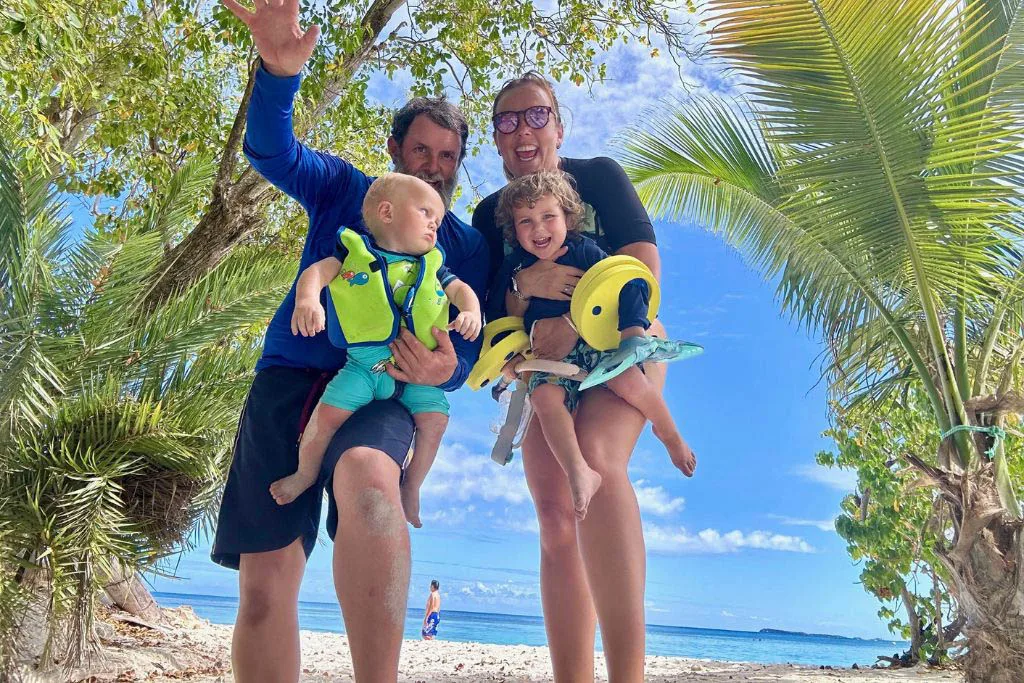
In an interview with Career Gappers, Young describes a background that included work as a waitress, bartender, windsurfing instructor and commercial manager before spending several years as a spa director in luxury hotels in the United Kingdom.
She enjoyed hospitality. But the role was demanding. The spa operated from early morning until late evening, making a part-time return after maternity leave difficult.
There was another practical issue. Young’s partner worked as a yacht captain. The family needed a work arrangement that could move between the United Kingdom and Antigua.
Young did not wait for a perfectly advertised vacancy.
After finding the company on Indeed, she contacted people at the business, including the CEO, and arranged an informal meeting. When a sales role became available, she was invited to interview. She asked whether the work could be location-independent. The company agreed.
She now works in sales for a technology startup that sells hospitality software.
This is an important detail. Young did not abandon her hospitality expertise. She transferred it into a technology business serving the same industry.
She understood hotel operations. She understood customer service. She understood the pressures faced by hospitality teams. That knowledge gave her credibility when selling software to hospitality businesses.
Her story shows two practical truths about remote work.
First, remote work is not only about working from home. It can support family arrangements, international mobility and a more flexible approach to location.
Second, initiative can create opportunities that a traditional application may never reveal.
Young identified a company. She started a conversation. She explained the type of work arrangement she needed. She made the connection before a suitable role was formally available.
That approach will not work with every employer. It does not replace qualifications or performance. But it demonstrates a useful principle for the Caribbean job market: do not limit your search to posted vacancies.
Research companies. Contact decision-makers professionally. Explain the value you bring. Be clear about the conditions under which you can do your best work.

What these stories say about Caribbean job market trends 2026
The strongest candidates will not only collect digital tools. They will connect those tools to real business problems.
A tourism professional moving into technology should ask:
- Which customer problems do I already understand?
- Which industry processes can I explain better than a technical outsider?
- Can I show how my previous experience improves sales, support, risk management or implementation?
- What digital skills would make my experience easier for employers to recognise?
A professional moving into cybersecurity should ask:
- Can I investigate and document incidents clearly?
- Do I understand basic networking, identity and access controls?
- Can I explain technical risks to non-technical colleagues?
- Which recognised certifications or practical projects support my next step?
- Can I work across time zones and maintain reliable communication?
Digital literacy is the starting point. It includes using cloud collaboration tools, managing digital information securely, understanding basic data practices and working confidently across online platforms.
AI fluency goes further.
It means knowing how to use AI tools responsibly for research, documentation, analysis and workflow support. It also means understanding their limitations. A cybersecurity analyst cannot accept an AI-generated conclusion without checking the evidence. A sales professional cannot rely on automated messaging without understanding the customer.
This is where human judgement remains essential.
AI can help sort information. It cannot take responsibility for a decision. It can suggest a response. It cannot replace context, empathy or accountability.
Build your pivot around evidence
Lonnia Hinds and Sara Young did not follow identical paths. One moved into cybersecurity operations and systems analysis. The other moved from luxury hospitality into remote technology sales.
Both stories point to the same practical strategy: make your transferable skills visible.
Do not write, “I have no technology experience,” if you have managed sensitive customer information, used booking systems, led teams, resolved incidents or trained colleagues.
Translate the experience.
- “Managed guest complaints” becomes conflict resolution and stakeholder management.
- “Ran daily hospitality operations” becomes process coordination and risk awareness.
- “Managed a spa team” becomes people leadership and performance management.
- “Worked across changing schedules” becomes adaptability and time-zone discipline.
- “Used hotel software” becomes experience with industry technology and digital workflows.
Then add the technical layer.
Take a course. Build a small portfolio. Earn a relevant certification. Join a professional community. Ask informed questions of people already working in the field.
For professionals looking for verified remote jobs Caribbean, the quality of the opportunity matters as much as the title. Check the employer. Review the responsibilities. Confirm the location requirements. Understand the salary range. Be cautious with vague offers and pressure to pay upfront fees.
SmartJobLinks helps Caribbean professionals approach that process with more information. Its AI Smart Matching evaluates fit across skills, salary expectations and time-zone compatibility. Its verified listings are manually reviewed before publication. Its Salary Intelligence provides data-backed compensation insights across roles and Caribbean territories.
A career pivot still requires effort. It should not require guesswork.

The next opportunity may be closer than it appears
A hospitality background can lead to cybersecurity. Luxury hotel experience can lead to remote technology sales. The route is not always obvious from the job title.
Look at the problems you already know how to solve.
Then identify the digital industries that need those skills.
The Caribbean’s next generation of technology professionals will not all come from traditional computer science routes. Some will arrive from hotels, hospitals, banks, construction sites, studios and customer service teams.
They will bring technical capability with them.
They will also bring context, discipline and human judgement. Those qualities will continue to matter, even as the tools change.